 By Shubham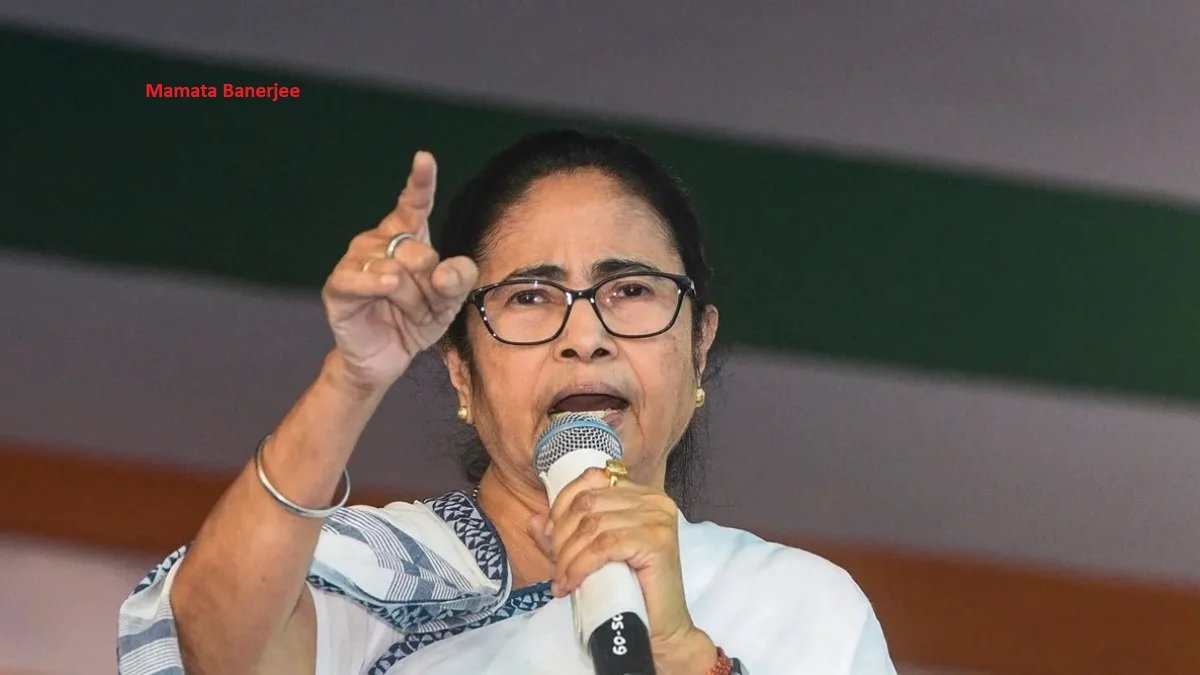
Mamata Banerjee, one of the most influential and powerful politicians in India, has carved her identity as a fierce leader, social reformer, and the first woman Chief Minister of West Bengal. With a political career spanning over four decades, Mamata has become a symbol of strength, particularly for the people of West Bengal. Known for her bold decisions, grassroots connection, and powerful speeches, she continues to play a pivotal role in Indian politics.
This article provides a comprehensive biography of Mamata Banerjee, covering her early life, education, political journey, achievements, controversies, and more.
Mamata Banerjee was born on 5th January 1955 in Kolkata (formerly Calcutta), West Bengal, to a lower-middle-class Bengali Brahmin family. Her father, Promileswar Banerjee, died when Mamata was just 17 years old, leaving the family in financial hardship.
- Mother’s Name: Gayetri Devi
- Siblings: Mamata has six brothers and is the only daughter of her parents.
Despite facing economic difficulties, Mamata pursued her education with dedication.
- Schooling: Deshbandhu Sishu Sikshalay
- Graduation: B.A. in History from Jogamaya Devi College, University of Calcutta
- Post-Graduation: M.A. in Islamic History from University of Calcutta
- Further Qualifications:
- B.Ed. from Shri Shikshayatan College
- Degree in Law from Jogesh Chandra Chaudhuri Law College
- Honorary Doctorate from Kalinga Institute of Industrial Technology (KIIT)
- B.Ed. from Shri Shikshayatan College
👉 Her educational background and legal knowledge helped shape her political thinking and social vision.
Mamata Banerjee entered politics at a young age through the Congress Party in the 1970s. She gained recognition as a youth leader of the Indian National Congress (INC).
- 1984: Elected as a Member of Parliament (MP) from Jadavpur.
- Youngest MP to be part of the 8th Lok Sabha.
- Defeated Somnath Chatterjee, a CPI(M) heavyweight.
Throughout the late 80s and early 90s, Mamata served in several key roles:
- General Secretary of Mahila Congress
- Part of the Youth Congress
- Worked under Prime Ministers Rajiv Gandhi and P.V. Narasimha Rao
In 1997, Mamata broke away from the Congress due to ideological differences and formed her own party — All India Trinamool Congress (AITC), popularly known as TMC.
The primary goal was to fight the long-standing Communist regime in West Bengal, which had ruled the state for over 30 years.
“I have formed TMC to give people a real alternative.” — Mamata Banerjee
Mamata held several important ministries in the central government:
- Introduced several new trains, especially for West Bengal.
- Implemented ‘Janmabhoomi Express’ and improved services for rural India.
- Promoted e-ticketing, women’s safety, and passenger facilities.
- Minister of Coal and Mines (2004)
- Minister of Women and Child Development
- Minister of Youth Affairs and Sports
After years of struggle, Mamata’s TMC defeated the 34-year-old CPI(M)-led Left Front government in 2011.
- Sworn in as Chief Minister on 20 May 2011
- Became the first woman to become CM of West Bengal
- 2016: Re-elected as CM with a thumping majority
- 2021: Defeated BJP in a high-stakes election amid pandemic challenges
Her 2021 victory was seen as a major blow to the rising influence of BJP in Bengal.
Mamata Banerjee’s governance is marked by people-centric schemes:
- Kanyashree Prakalpa: For girl child education. Recognized by UNESCO.
- Rupashree Scheme: Financial help for poor girls’ marriage.
- Sabooj Sathi: Free bicycles to school-going children.
- Duare Sarkar: Government at your doorstep initiative.
- Swasthya Sathi: Universal health insurance for families.
- Development of rural roads, bridges, and electrification.
- Promotion of Kolkata East-West Metro Project.
- Focus on MSME sector, women’s empowerment, and job creation.
Many critics claim Mamata runs a highly centralized and authoritative government, suppressing dissent.
Incidents of political violence, especially during elections, have attracted criticism from opposition parties.
In recent years, TMC leaders have been accused in the School Service Commission (SSC) recruitment scam, which has tarnished the image of the state administration.
Mamata has had multiple face-offs with Governors and the Central Government, especially over federal policies, CBI raids, and fund allocation.
Mamata Banerjee is known for her simple lifestyle, white cotton sarees, rubber slippers, and no-frills attitude. She is also a:
- Painter and writer with over 100 books published
- Poet with collections in Bengali
- Singer and composer of political and spiritual songs
Her image as “Didi” (elder sister) connects her strongly with the masses.
Mamata is increasingly seen as a national alternative to BJP. Her party is an important part of opposition alliances like:
- INDIA bloc (Indian National Developmental Inclusive Alliance)
- Called for United Opposition Front ahead of 2024 Lok Sabha elections
“I want to oust the fascist BJP from power,” she has declared multiple times.
- Widely respected for her grassroots connect
- Considered a symbol of women’s empowerment
- Popular among rural and urban voters alike
- Continues to enjoy a strong base despite national-level opposition
- UN Public Service Award for Kanyashree (2017)
- Featured in Time Magazine’s 100 Most Influential People (2021)
- Multiple awards for social schemes and administrative efficiency
| Year | Constituency | Result |
| 1984 | Jadavpur | Won (INC) |
| 1991 | Calcutta South | Won |
| 1996 | Calcutta South | Won |
| 1998 | Calcutta South | Won |
| 1999 | Calcutta South | Won |
| 2004 | Calcutta South | Won |
| 2009 | Calcutta South | Won |
| 2011 | Bhabanipur (Assembly) | Won |
| 2021 | Nandigram (Assembly) | Lost (But later won Bhabanipur in bypoll) |
Some notable books authored by her:
- My Unforgettable Memories
- Upalabdhi
- Janatar Darbar
- Struggle for Existence
- Refugees, Migrants and the Stateless
With Lok Sabha Elections 2024 behind us, Mamata Banerjee remains a key national leader. Her influence in state politics is unmatched, and her vision for federalism and inclusive governance keeps her in the national spotlight.
Whether she chooses to lead the Opposition or focus on West Bengal development, her legacy is already established.
Mamata Banerjee is not just a politician; she is a movement, a voice for the marginalized, and a fighter. Her journey from a modest home in Kolkata to becoming one of India’s most powerful Chief Ministers is a testament to her grit, intelligence, and people-first approach.
Her ability to challenge the status quo, stand firm against political giants, and bring about real change has made her a figure of national importance.
| Attribute | Details |
| Full Name | Mamata Banerjee |
| Born | 5 January 1955 |
| Education | M.A., B.Ed., Law |
| Political Party | All India Trinamool Congress (TMC) |
| Position | Chief Minister of West Bengal |
| Tenure | Since 2011 |
| Notable Work | Kanyashree, Duare Sarkar, Swasthya Sathi |
| Known As | Didi (Elder Sister) |
| Books Written | 100+ |
| Hobbies | Writing, Painting, Singing |